

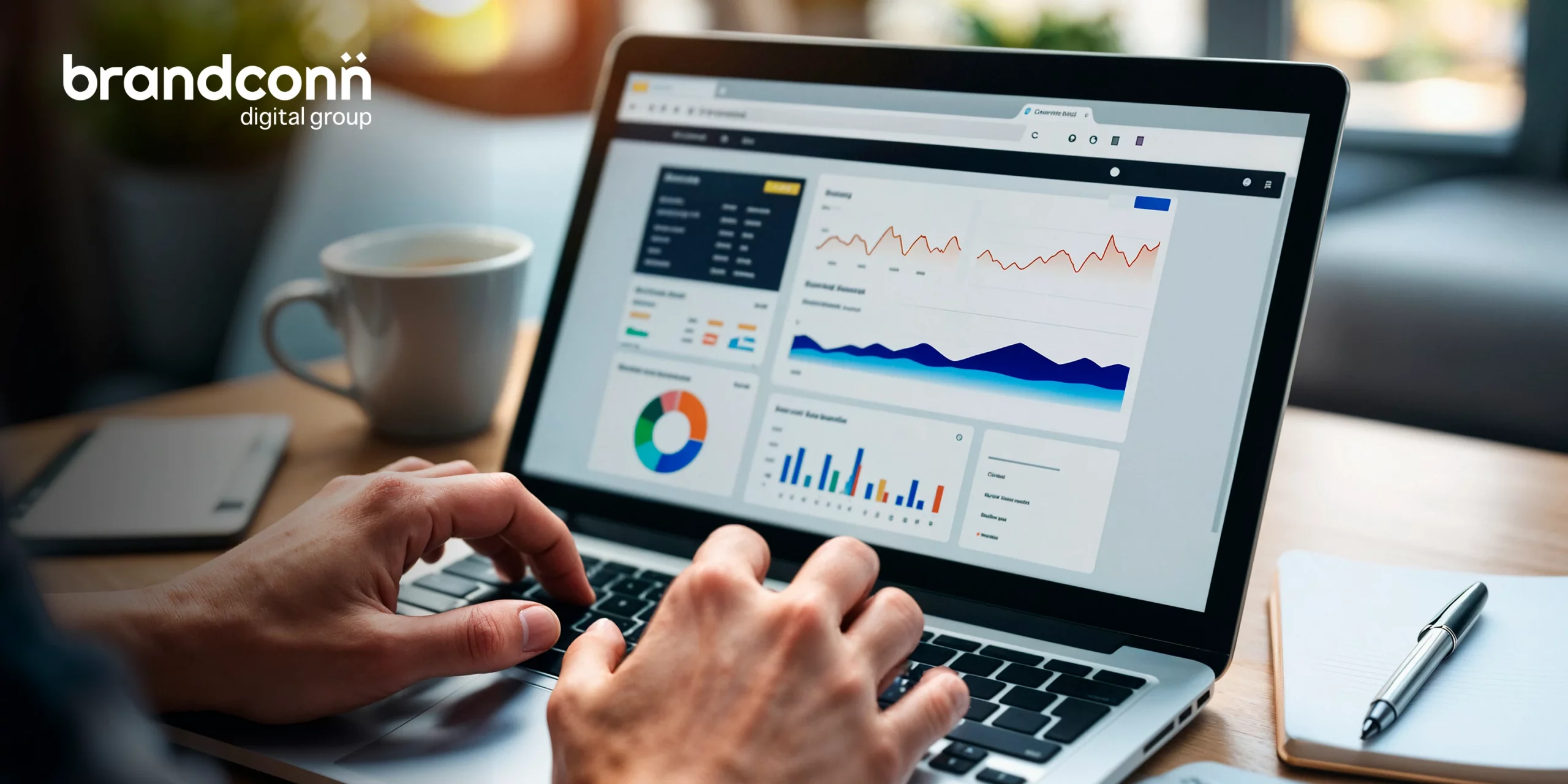
In today’s fast-moving digital landscape, running a successful business without understanding your SEO performance is like driving with your eyes closed.
Even if you’ve invested in a strong SEO strategy — maybe even partnered with a Digital Marketing Company in India or signed up for professional SEO Services India — how do you know if your efforts are paying off?
That’s where an SEO dashboard comes in.
It’s your window into your website’s performance. Done right, it can show you exactly what’s working, what isn’t, and where to focus your time and budget.
In this guide, you’ll learn:
- What is an SEO dashboard?
- Why it’s essential in 2026
- Which metrics to track (with clear examples)
- Latest trends in SEO dashboards
- The best tools for building one
- And answers to common questions businesses like yours ask
By the end, you’ll know how to set up an SEO dashboard that’s easy to understand and helps grow your business.
What is an SEO Dashboard?
An SEO dashboard is a reporting interface that pulls all your website performance data into one central location.
It tracks how your site performs across search engines by monitoring key metrics: organic traffic, keyword rankings, click-through rates, conversions, technical health, and more.
Think of it as your SEO control room. Instead of checking multiple tools separately and trying to connect the dots manually, you open one dashboard and get a clear picture of what is happening across your entire online presence.
Why Should You Use an SEO Dashboard?
Whether your SEO is managed in-house or through a digital marketing company in India, an SEO dashboard is what keeps your strategy accountable.
Here is what it does for your business:
- Saves time by bringing all your data into one view
- Shows you which campaigns are delivering results and which are not
- Alerts you early when traffic or rankings drop unexpectedly
- Helps you measure return on investment and justify your SEO spend
- Lets you benchmark your performance against competitors
Without a dashboard, you are making decisions based on assumptions. With one, every decision is backed by real data.
What Has Changed in SEO Dashboards from 2025 to 2026?
In 2025, dashboards focused heavily on traditional organic traffic and keyword positions. In 2026, the landscape has shifted considerably.
Search has become far more fragmented. A growing share of queries now receive answers directly through Google’s AI Overviews, through Perplexity, through ChatGPT search, and through voice assistants. Users often get the information they need without ever clicking through to a website.
This means your SEO dashboard in 2026 must go beyond traditional rankings. It needs to track your visibility across AI-generated search formats, monitor brand mentions in large language model outputs, and measure engagement quality rather than traffic volume alone.
Businesses that adapt their dashboards to reflect this shift will be in a much stronger position than those still tracking only classic rank positions.
How to Build an SEO Dashboard: Key Metrics to Include?
Not all dashboards are created equal. A good one focuses only on the most important metrics — the ones that directly impact your business goals. Below are the metrics we recommend tracking, explained in layman’s terms with examples:
1. Organic Traffic

What it is:
The number of visitors reaching your site through unpaid search results on Google, Bing, or other search engines.
For example, if someone types “best accounting software” and clicks your website from Google’s results, that’s organic traffic.
Why it matters:
It tells you whether your SEO work is bringing more people to your site over time and whether that number is growing consistently.
Action step:
If organic traffic is flat or declining, revisit your content, keyword targeting, or site structure. Tools like Moz Keyword Planner can help find new keyword opportunities.
What to watch in 2026:
Track not just total sessions but also trend lines by month. A flat or declining curve often signals a need to revisit content freshness, keyword targeting, or site structure.
2. Keyword Rankings
What it is:
The position your pages hold in search results for specific keywords your business wants to be found for.
For example, if you’re targeting “affordable SEO services” and your page ranks #3 on Google, that’s your keyword ranking.
Why it matters:
Higher positions translate directly to more impressions and more clicks. A page sitting on page two rarely gets meaningful traffic.
Action step:
Track your most important keywords and optimize pages that are stuck on page 2 or lower to improve their rankings.
What to watch in 2026:
Track your rankings for both traditional search and for long-tail conversational queries that align with how people speak to AI search tools. These formats now carry growing traffic share.
3. Conversion Rate
What it is:
The percentage of visitors who complete a meaningful action, whether that is making a purchase, filling out a contact form, or booking a consultation.
For example, if 500 people visit your site this month and 25 of them make a purchase, your conversion rate is 5%.
Why it matters:
Traffic growth is only valuable if it leads to business outcomes. A rising conversion rate means your content and site experience are working together effectively.
Action step:
If conversion rate is low despite decent traffic, review your calls-to-action, landing page clarity, page speed, and overall user journey.
4. Bounce Rate

What it is:
Bounce rate measures the percentage of visitors who land on a page and leave without taking any further action.
In Google Analytics 4, engagement rate has become the primary measure. It shows the percentage of sessions where a user spent meaningful time on the page or took an action.
Why it matters:
A high bounce rate often signals that a page is not matching what the visitor expected to find. This hurts both user experience and rankings over time.
Action step:
Identify your highest-traffic, highest-bounce pages. Improve content relevance, add internal links, and address any speed or design issues. A website design company can help resolve underlying usability problems.
5. Organic Click-Through Rate (CTR)
What it is:
The percentage of people who see your listing in search results and choose to click on it.
For example, if your page appears 200 times in search results and receives 16 clicks, your CTR is 8%.
Why it matters in 2026:
With AI Overviews occupying prime screen space above organic results, CTR on traditional listings has become harder to win. A compelling meta title and description are now more critical than ever.
Action step:
Test different title formats. Instead of: “SEO Dashboard Guide”
Try: “SEO Dashboard 2026: What to Track and Why It Still Matters”
6. Technical SEO Metrics
In 2026, technical SEO is more important than ever. Your dashboard should include:
| Metric | What it means | Why it matters |
| Core Web Vitals | Page speed & stability | Affects user experience & rankings |
| Mobile Usability | How your site works on phones | More than half of the traffic comes from mobile |
| Indexed Pages | Pages included in Google’s index | Only indexed pages can show up in search |
A technically sound site is the foundation. Without it, no amount of content or link building will deliver its full potential.
7. Local Search Rankings
If your business serves a specific city or region, local rankings deserve their own section of your dashboard.
For example, a WordPress development company in Noida would want to monitor how it appears for searches like “WordPress developer near me” or “web development company in Noida.”
Why it matters:
Local searches often lead to real-world visits or calls.
Action step:
Keep your Google Business Profile accurate and fully completed. Gather genuine customer reviews consistently. These two factors have an outsized impact on local pack rankings in 2026.
8. Competitor Performance
Many modern dashboards allow you to keep an eye on competitors’ rankings, backlinks, and content.
For instance, if a competitor suddenly outranks you for an important keyword, you can investigate why and adjust your strategy accordingly.
(Read more: Why UK & US Brands Prefer a Website Design Company in India?)
9. AI Search Visibility (New in 2026)
This is the metric that did not exist in most dashboards a year ago and is now becoming standard for forward-thinking businesses.
What it is:
Tracking whether and how your brand appears in responses generated by tools like Google’s AI Overviews, ChatGPT, Perplexity, and Gemini.
Why it matters:
A growing share of users now read AI-generated summaries instead of clicking through to traditional search results. If your brand is cited within those summaries, you gain visibility and trust even without a direct click.
Action step:
Work on building genuine brand authority through expert content, authoritative backlinks, and consistent topical coverage. These are the signals that large language models draw on when generating answers. For a deeper look, explore Brandconn’s AEO Services and AI SEO Services.
What Are the Biggest SEO Dashboard Trends in 2026?
SEO dashboards are evolving to meet today’s challenges. Here are some trends shaping dashboards this year:
AI-Powered Search Tracking
With AI Overviews, voice search, and generative AI answers now common, businesses are starting to track their visibility in these new formats alongside traditional rankings.
(Read more: How to Use an AI ChatBot Called ChatGPT in SEO)

Search Experience Tracking
Dashboards in 2026 track performance across the full search experience: classic blue links, AI Overviews, featured snippets, local packs, video results, and image carousels. Each placement type has its own value and requires its own tracking.
Integration Across Platforms
Modern dashboards connect your SEO data with your CRM, Google Ads, email marketing, and social channels. This gives you a complete picture of how search fits within your wider marketing performance.
Predictive Reporting
Several leading tools now use historical data patterns to forecast future ranking movements and traffic trends. Rather than reacting to drops after they happen, predictive dashboards allow you to take action in advance.
Emphasis on Content Quality Signals
Following a series of Google core updates through 2025, dashboards now increasingly surface content quality metrics: page depth (how far users scroll), time on page, return visit rates, and internal link engagement. These signals help identify which content is genuinely serving users versus which pages are simply filling keyword gaps.
Best Tools to Build Your SEO Dashboard in 2026
You don’t need to build a dashboard from scratch. Here are some of the best tools to consider:
| Tool | Key Features | Best For |
| Google Looker Studio | Free, customizable, integrates with Google tools | Beginners & budget-conscious |
| SEMrush | Competitor analysis, backlink tracking, keyword monitoring | Agencies & large businesses |
| Ahrefs | Backlink insights, content gap analysis | Link-building strategies |
| Moz Pro | Simple interface, great site audits | Small & medium businesses |
| Databox | Real-time tracking & beautiful templates | Business owners & marketers |
For more free options, check out Best Free SEO Tools for 2026.
FAQs on SEO Dashboards
What is the biggest challenge when building an SEO dashboard?
Most businesses struggle with choosing which metrics to prioritize. Tracking too many numbers makes it hard to act on any of them. Start with five to seven core metrics and expand from there.
How often should I review my SEO dashboard?
Check your dashboard weekly to catch sudden changes in traffic or rankings. Review it monthly to assess overall trends and quarterly to evaluate strategic performance.
Should my SEO dashboard include competitor data?
Yes. Tracking competitor keyword movements and backlink growth helps you stay informed about market shifts and identify gaps in your own strategy.
Can an SEO dashboard track AI search performance?
Dedicated tools such as Search Atlas and Semrush’s AI Toolkit are building out features for this. It is still an evolving area, but tracking brand mentions and AI-generated answer appearances is becoming standard practice.
Do I need separate dashboards for SEO and paid search?
It depends on your setup. Many businesses benefit from a combined dashboard that shows both organic and paid performance side by side. This makes it easier to see the full picture of your search investment.
Conclusion
An SEO dashboard is your clearest view into how your website is performing and where your strategy needs to evolve.
In 2026, the best dashboards go beyond keyword rankings and organic traffic. They track technical health, content engagement, backlink growth, local visibility, and the growing influence of AI-generated search results.
The businesses that will grow their online presence this year are those that monitor all of these signals and act on what the data tells them.
If you are ready to build a dashboard that genuinely drives results, or if you want expert support managing your SEO performance, contact Brandconn today.
As a trusted digital marketing company in India offering professional SEO services in India, we work with businesses across industries to grow their visibility and attract the right customers.

